Command injection is a type of security vulnerability that can allow attackers to execute unauthorized commands on a server or system.
This blog will guide you through the basics of command injection, how attackers discover and exploit these vulnerabilities, and how to protect your systems from them.
Command injection occurs when an attacker is able to inject malicious commands into an application, which then executes these commands on the host operating system.
This vulnerability typically arises when user inputs are not properly sanitized or validated. For example, imagine a web application that allows users to enter their username to check their account details. If this input is used directly in a system command (like calling a shell command to look up a user), the attacker could potentially manipulate the input to execute arbitrary commands on the server.
Common Types of Command Injection
- Shell injection: The attacker injects shell commands (like ls, rm, or cat) into the application, which then executes them.
- SQL injection: Though technically different, it can be a form of command injection when user input is used directly in a database query.
Discovering Command Injection
Attackers usually discover command injection vulnerabilities by testing user inputs on web applications. Here’s how they might go about finding a command injection point:
- Observing Input Fields: Attackers look for any form field that interacts with system commands. This might include search boxes, file uploads, or contact forms that trigger backend scripts.
- Injecting Special Characters: To test if user inputs are being used in system commands, attackers try injecting special characters like ;, |, &, or even backticks (`) to see if the system executes unintended commands. These characters are often used to chain or separate commands in Unix-based systems. Example: An attacker might input ; ls in a search box, trying to list the files on the server.
- Error Messages: The response from the server can sometimes reveal useful information about the system's behavior. If error messages indicate that a command was not properly sanitized, attackers will know they can inject commands.
Exploiting Command Injection
If an attacker successfully discovers a command injection vulnerability, they can exploit it in various ways:
- Executing Malicious Commands: Attackers can use the injection point to run system commands on the server. This could include: Viewing sensitive files (e.g., /etc/passwd in Unix-based systems). Altering or deleting files. Starting a reverse shell that allows remote control of the server.
- Gaining Access: If the system has weak security, attackers might escalate their privileges and gain unauthorized access to sensitive data or services.
- Impact on the System: Command injection can have severe consequences, such as: Data breaches (exposing confidential information). Denial of service (by shutting down the system or deleting essential files). Remote control of the server for further attacks.
Remediating Command Injection
The good news is that command injection vulnerabilities can be prevented by following some simple best practices:
Input Validation and Sanitization: Whitelist inputs: Only accept inputs that match a defined pattern (e.g., letters and numbers) and reject anything else.
Escape special characters: Make sure that user inputs that are used in system commands do not contain characters like ;, |, or &.
Use Parameterized Commands: Instead of directly inserting user input into system commands, use safer alternatives like parameterized APIs. This way, user input is treated as data, not as part of the command.
Avoid Using Shell Commands: Where possible, avoid passing user input to shell commands at all. Use safer alternatives, such as library functions or APIs that don’t involve the system shell.
Limit User Permissions: Even if an attacker manages to exploit a command injection vulnerability, limiting the system’s permissions can reduce the impact. Restrict what users (including the application itself) can do on the system.
Error Handling: Ensure that the application does not expose sensitive information in error messages. Generic error messages can prevent attackers from gaining insights into the inner workings of the system.
Delegates task to Experts: At Tinycrows, our expert solutions help organizations effectively mitigate the risks of command injection vulnerabilities by applying industry best practices. [Read more] to understand how we assist businesses in identifying, remediating, and preventing command injection attacks, ensuring their systems remain secure and resilient.
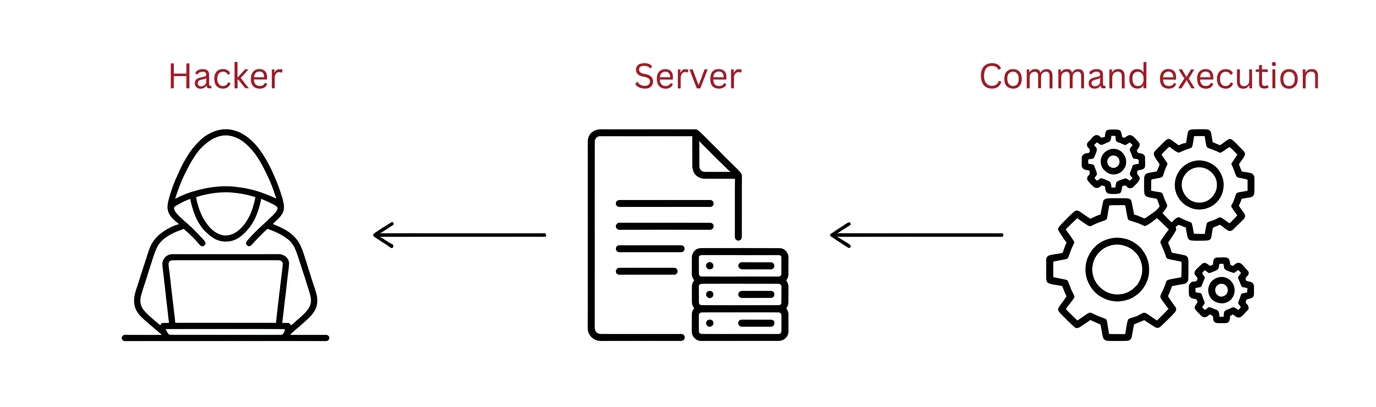
Command injection is a dangerous security vulnerability that can give attackers full control over a system, but it’s preventable with the right practices. By validating user inputs, avoiding system calls that use user input, and applying proper access controls, you can significantly reduce the risk of a successful attack. Stay vigilant about securing your applications and always prioritize proper input validation.
References:
https://www.ubikasec.com
https://www.indusface.com

.png)